
Chimney Repair in Middletown, NY
Repointing worn mortar, replacing spalled brick, fixing cracked crowns and tracing the water path behind nearly every masonry problem.
Almost every chimney repair starts with water
Chimney repair in Middletown nearly always comes back to one thing. Heat is what a chimney is built to handle. Water is what takes it apart.
Brick and mortar soak up moisture. In our winters that moisture freezes and expands, over and over. Each cycle opens the material a little more. That lets in more water, which does more damage the next time it freezes.
So the right repair depends on where the water is getting in. Sealing a ceiling stain does nothing if you have not found the path. We look for the entry point first, then fix that.
What we repair
Worn mortar joints
Mortar is softer than brick by design, so it wears out first. Joints that have gone soft, crumbly or sunken let water into the wall. Over time the stack weakens.
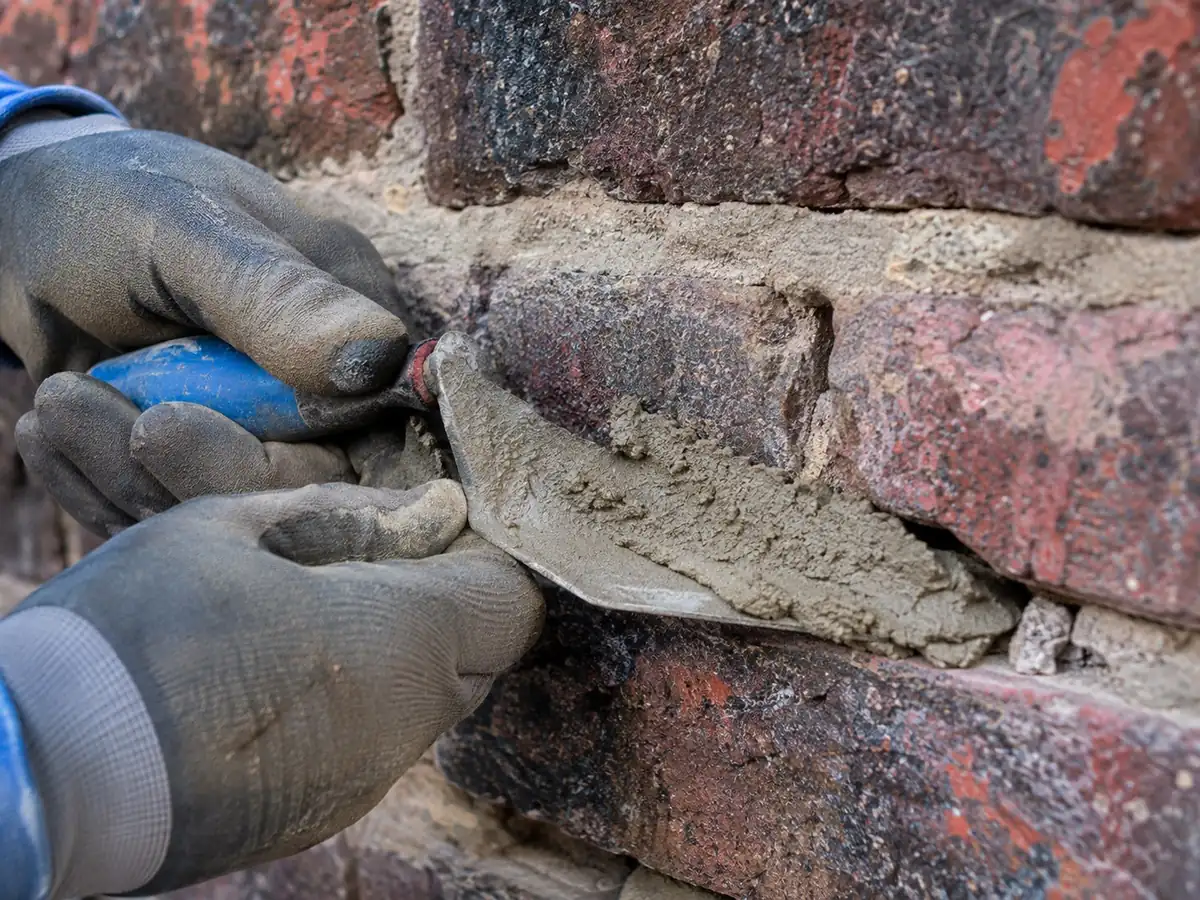
The fix is repointing, sometimes called tuckpointing. We cut out the failed mortar to an even depth and fill the joints with fresh mortar matched to the original. Caught early it is a straightforward job. Left too long, the brick starts to move, and then you are looking at a rebuild.
Spalled and damaged brick
Spalling is when the face of a brick flakes, crumbles or pops off. A soaked brick freezes, the water expands, and it pushes the face away from the body. Once the outer skin is gone, the brick soaks up water faster. So spalling spreads. We cut out the bad units and replace them with brick matched as closely as we can.
Cracked chimney crowns
The crown is the sloped slab across the top of the stack. A good one overhangs the brickwork and has a drip edge so water falls clear instead of running down the sides.
Crowns crack. Sometimes from shrinkage the day they were poured. Sometimes from heat movement or freeze-thaw. A cracked crown funnels water straight into the core of the chimney. Small cracks can often be sealed with a flexible crown coating. A crown that has broken up, or one poured flat with no overhang, usually needs rebuilding.
Leaks and water damage
Water announces itself in a few ways. A stain on the ceiling beside the chimney. Damp or a musty smell in the firebox. White powder on the outside brick, called efflorescence, where salts have been carried out by moisture. Rust on the damper. Each points somewhere slightly different, which is why we trace it instead of guessing.
Flashing problems
Flashing is the metal sealing the joint where the chimney meets the roof. Ice, sliding snow and normal building movement all work against it. If water is coming in there, we will tell you what we see. And if the job belongs to a roofer rather than a mason, we will say that too instead of taking on work outside our lane.
Firebox and smoke chamber
Inside the fireplace, missing mortar between firebricks and cracked firebrick are both common in older Middletown homes. So are rough, stepped smoke chamber walls that were never smoothed. Those make the chimney draft poorly and collect creosote faster.
Signs you should stop using the fireplace
Some chimney problems can wait until spring. These should not. Brick or mortar landing on the roof or in the yard. A stack that looks tilted or bowed. A gap opening between the chimney and the house. Large pieces of crown missing. Cracks in the firebox wide enough to fit a coin. If you see any of these, stop burning and call.
How chimney repair pricing works
We cannot quote a chimney repair from a phone call or a photo, and you should not trust anyone who does. Two chimneys with identical staining can need very different work. One might need a cap and a crown seal. The other might need the stack rebuilt above the roof line.
So the order is: look at it, explain what we found and why, then price the actual work. You get the number before anything starts. Most repairs begin with a chimney inspection.
Repairs are seasonal here
Masonry needs temperatures above freezing to cure properly. That makes exterior chimney repair warm-weather work in New York. If you spot damage in January, still call. There are usually steps we can take to limit further water damage until the real repair can be done right.
Where the fix is keeping water out of an open flue, that often means a new chimney cap. Where the damage has reached the flue, see chimney liner installation.
Stop using the fireplace if
- Brick or mortar is falling into the yard
- The stack looks tilted or is pulling away
- You have had a chimney fire
- There are wide cracks in the firebox
- Smoke enters through walls or the attic
Book repairs in warm weather
Spring through fall is the window for masonry work in Middletown. Booking early also means the chimney is sorted before you actually need it.
Have a chimney problem looked at
Describe what you are seeing. Falling mortar, a ceiling stain, a cracked crown. We will arrange a look.
40 Mulberry St, Middletown 10940 · Serving Middletown and nearby Orange County communities.