
Chimney Inspection in Middletown, NY
Finding out what shape your chimney is really in — the liner, the masonry, the crown, the cap and the firebox — before deciding what to do about it.
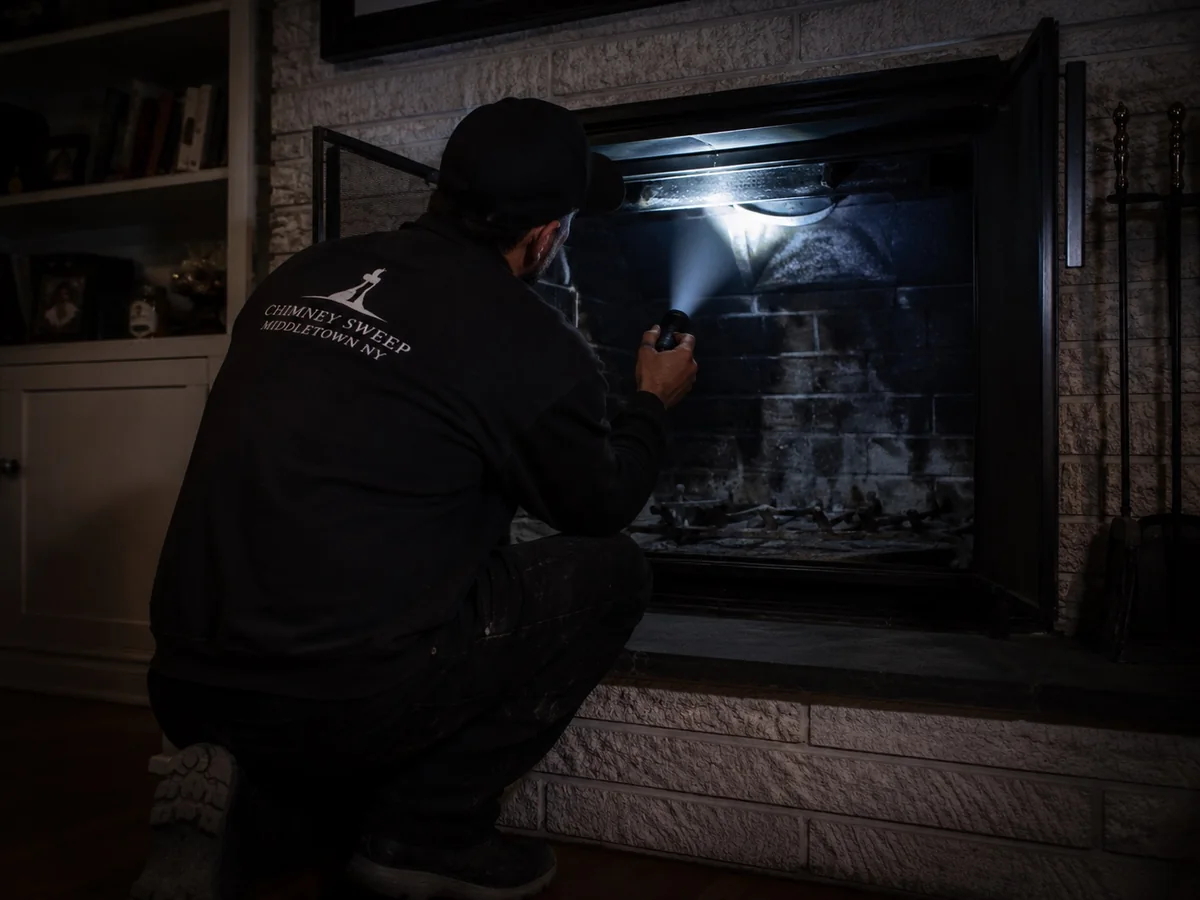
An inspection answers a different question than a sweep
A chimney inspection in Middletown tells you what condition your chimney is in. A sweep removes what has built up inside it. The two overlap, but they answer different questions.
Here is the problem. Most of a chimney is hidden. You can see the stack from the yard and the firebox from your living room. Everything in between sits inside the masonry. That is where trouble starts. It is also why chimney problems are usually well advanced by the time anyone notices them from the ground.
What we check
How much we can reach depends on the house and the weather that day. A typical inspection covers:
- The flue liner Clay tiles for cracks, gaps and shifting. Metal liners for rust or split joints.
- The firebox Firebrick and the mortar between it. We look for cracks and heat damage.
- The damper and smoke chamber Does the damper open, close and seal? Are the smoke chamber walls sound?
- The outside masonry Mortar joints, loose brick, leaning, and staining that shows water is moving.
- The crown and cap Cracks in the top slab. Whether a cap is there, fits, and is still intact.
- Flashing at the roof line The metal seal where the chimney goes through the roof, as far as we can safely see.
- The appliance connection For stoves and inserts, the pipe and how it enters the chimney.
What we usually find in Middletown
Cracked or shifted clay tiles. Usually after a chimney fire, or after years of water getting into the flue. A liner with gaps no longer keeps heat and exhaust where they belong.
Water damage nobody has seen yet. A cracked crown or a missing cap lets water into the core of the chimney. It breaks down mortar from the inside. By the time a stain shows up on a bedroom ceiling, it has been going on a while.
Worn mortar joints. Soft, crumbling or sunken joints above the roof line. That is the most exposed masonry on the whole house, and our winters are hard on it.
Blockages. Nests, leaves and fallen debris. We find these in plenty of chimneys the owner believed were capped.
Nothing much at all. This happens often, and it is a good outcome. Worth knowing before a winter of use.
The three inspection levels, in plain English
The industry sorts chimney inspections into three levels. It helps to know the words before you call anyone.
Level 1 covers what we can see without tools or taking anything apart. It suits a chimney in regular use with no known problems and no changes to the system.
Level 2 adds accessible attics, crawl spaces and basements, plus a camera scan inside the flue. This is the level called for when a house is being sold, when you change heating appliances, or after a chimney fire.
Level 3 means opening up part of the chimney or the building to reach a hidden area. It is only right when a serious hazard is suspected and there is no other way to check.
Tell us what prompted your call and we will tell you which level fits.
When to book one
Once a year is the baseline. The National Fire Protection Association recommends an annual inspection, and the Chimney Safety Institute of America says the same.
Some moments matter more than the calendar. Book an inspection when you buy or sell a house. Book one before you install a wood stove or insert. Book one after any chimney fire, however small it seemed. Book one after a bad storm, or when smoke starts coming into the room, or when you see staining or falling debris. If your chimney has sat unused for years, have it checked before you light it, not after.
What it costs
A Level 1 inspection is a set price and we will tell you what it is on the phone. A Level 2 takes longer because of the camera scan, so it costs more. We say the number before we book, not after we arrive.
Repairs are different. We do not price those over the phone. Two chimneys with the same stain can need completely different work, and any number given sight unseen is a guess.
Why catching it early is cheaper
An inspection tells you what to plan for. A hairline crown crack sealed this year is a small job. The same crack left for five winters can mean a rebuilt crown and a ruined liner. We would rather tell you about a problem while it is still cheap.
If we find deposits, that is a chimney sweep. If we find masonry damage, that is chimney repair. If the liner is the problem, see chimney liner installation.
Book an inspection if
- You are buying or selling the house
- You are adding a stove or insert
- You have had a chimney fire
- Smoke is coming into the room
- You see damp, staining or falling debris
- The chimney has sat unused for years
Not sure which you need?
Call (845) 685-9770 and describe what is happening. We will tell you whether it is a sweep, an inspection or both. It is usually a short conversation.
Request a chimney inspection
Tell us what prompted the call. We will explain what the inspection should cover and what it costs before we book it.
40 Mulberry St, Middletown 10940 · Serving Middletown and nearby Orange County communities.