
Chimney Liner Installation in Middletown, NY
A chimney liner is the working part of the chimney. When it cracks, rusts or no longer suits the appliance, chimney liner installation restores a proper flue.
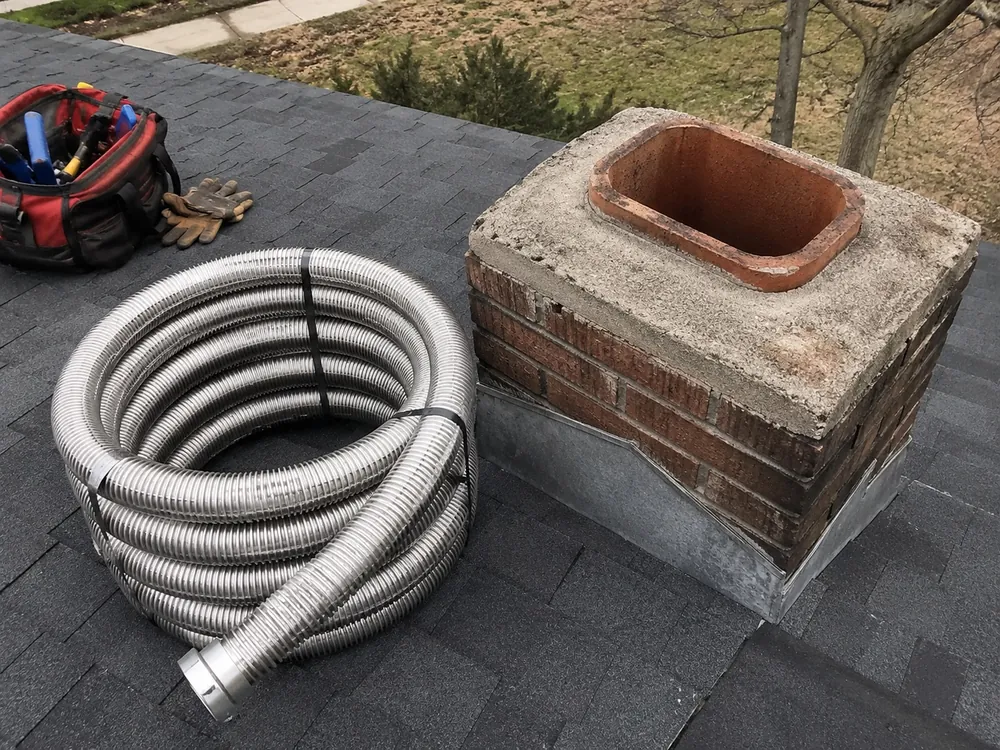
What a chimney liner does
The liner is the passage inside your chimney that smoke actually travels through. The brickwork around it is structure. The liner is the working part.
It does three jobs. It holds in the heat of the exhaust, so that heat does not reach the masonry and the wood framing nearby. It keeps corrosive combustion gases from soaking into the brick and mortar. And it gives your appliance a correctly sized passage so it drafts the way it should.
Here is the catch. A chimney with a ruined liner still looks like a chimney from the yard. That is what makes liner problems difficult. They are invisible from anywhere you normally stand, and they are the problems that matter most.
How liners fail
Cracked clay tiles
Most masonry chimneys around Middletown are lined with clay tiles stacked one on another with mortar joints between. Clay handles heat well but it is brittle.
A chimney fire can crack tiles outright, because the heat comes on fast. Water from a failed crown or a missing cap erodes the joints and freezes inside the cracks. Over time tiles flake, shift out of line, or drop pieces onto the smoke shelf. Those pieces in the firebox are often the first clue a homeowner gets.
Gaps at the joints
Even intact tiles are only as good as the mortar between them. Where those joints have washed out, there are openings between the flue and the masonry. Heat and exhaust can then reach places they were never meant to go.
Rusted metal liners
Metal liners fail differently. Flue gases carry acidic moisture, especially on appliances that vent cooler. Over years that eats the metal. Thin or low-grade liners go first.
Chimneys with no liner at all
Some older chimneys were built with no liner, the flue running straight against the brick. That was normal practice long ago, and we still find them in the oldest homes around Middletown. If you have one, you want to know before you install a stove or start burning regularly.
When to have the liner checked
- After any chimney fire, however brief
- When you find clay tile pieces in the firebox
- Before putting a wood stove or insert into an old chimney
- When you change to an appliance that vents differently
- After years of water getting into the flue
- On an old house where nobody knows if there is a liner
The way to answer the question is a camera scan during a chimney inspection. It is the only reliable way to see the full length of a liner.
Size matters as much as condition
A liner has to match the appliance venting into it. This is the issue we run into most often when an insert or wood stove has been fitted into an old fireplace chimney.
The original flue was sized for an open fireplace. It is far too big for the new appliance. An oversized flue lets exhaust cool on the way up. Cool exhaust means weak draft and faster creosote. Those are exactly the conditions that create the glazed deposits that are hardest to sweep out.
Common liner materials
Clay tile is the traditional lining in masonry chimneys. It is cheap and long-lasting when kept dry. It is also hard to replace inside a standing chimney without significant masonry work.
Stainless steel is the usual choice for relining an existing chimney. Rigid sections for straight runs, flexible for chimneys with offsets. Different grades suit different fuels. It is normally insulated inside the old flue to keep exhaust temperatures up.
Cast-in-place systems form a new seamless liner inside the old flue by pouring a masonry mix around a form. They can add strength to a failing chimney, but it is a bigger job.
Which one suits you depends on the chimney, the appliance and the condition of the existing flue. Any liner should be installed following the manufacturer's instructions for that system and appliance. Requirements vary, so confirm what applies with the local building department before work starts.
What usually comes with a relining job
Water is why most liners fail. Relining without fixing how water gets in leaves the new liner facing the same conditions that killed the old one.
So a liner job often goes together with crown or masonry repair and a properly fitted cap. We will tell you which of those apply to your chimney and which do not.
Installing a wood stove?
Have the flue checked before you order the appliance, not after. Liner size and condition can change what will vent safely into that chimney.
Find out what shape your flue is in
A camera scan during an inspection is the reliable way to see the whole liner. Call and we will talk it through.
40 Mulberry St, Middletown 10940 · Serving Middletown and nearby Orange County communities.