
Chimney Questions, Answered
What homeowners in Middletown ask us most often — about sweeping, creosote, inspections, smells, leaks, caps and liners.
Common questions about chimney sweeping, creosote, inspections, caps, liners and repairs. If yours is not here, ask us directly — the answer often takes one phone call.
Chimney sweeping
How often does a chimney need to be swept?
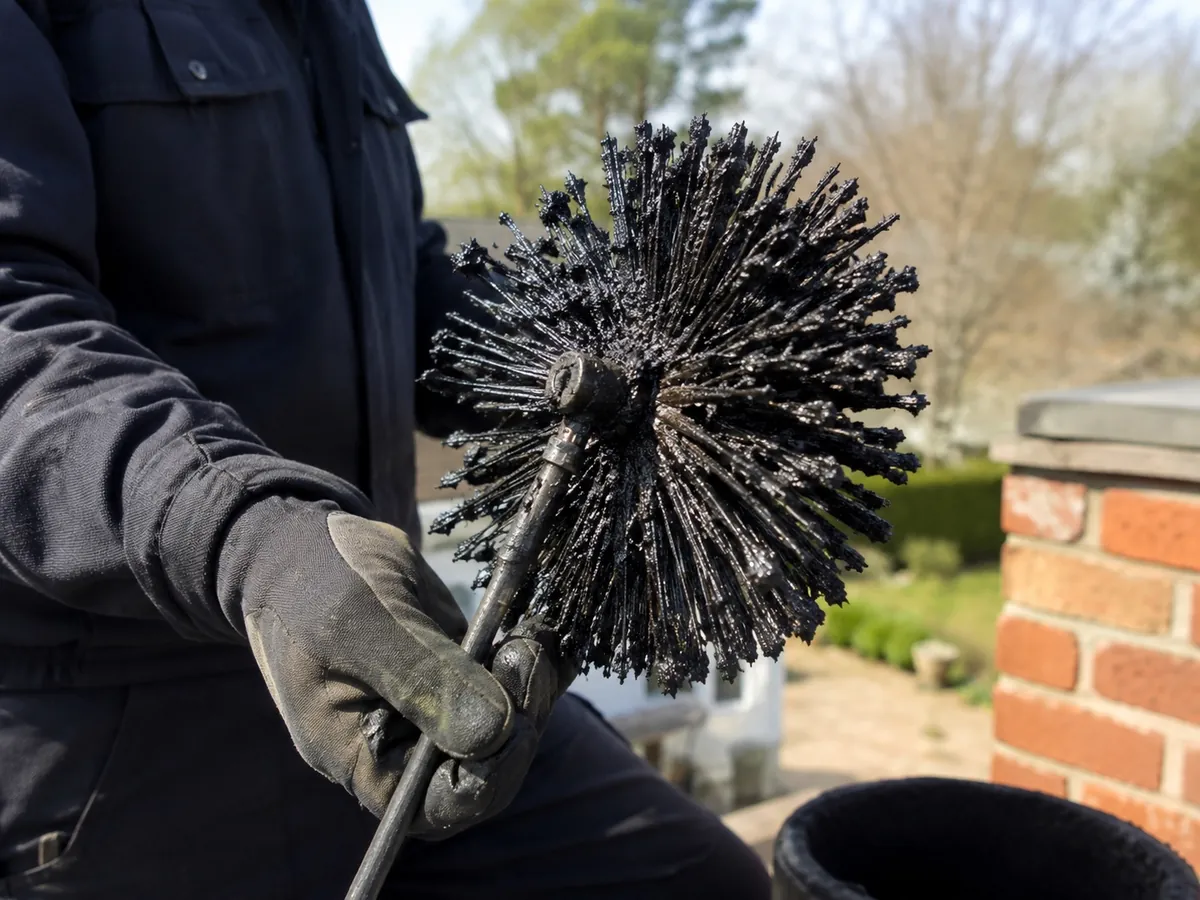
It depends on use, not on the calendar. The common guidance is that a flue should be swept once deposits reach roughly an eighth of an inch, and that the chimney should be looked at once a year regardless. A wood stove used as a primary heat source through a Middletown winter can reach that point every season. A fireplace lit a handful of times a year may go longer, though it still collects debris and still needs checking.
How long does a chimney sweep take?
About an hour for a straightforward single-flue fireplace, including setting up and packing down. Add time for heavy or hardened creosote, for a stove where the connector pipe has to be taken apart to reach the flue, or for removing a nest.
Is it messy? Will soot get into my house?
It should not. The hearth and floor are covered, the fireplace opening is sealed during the sweep so the work happens inside a closed system, and a vacuum runs throughout to capture airborne soot. The precautions exist because fine soot travels easily and is very hard to get out of fabric once it does.
Do I need to do anything before you arrive?
Do not burn anything for at least 24 hours beforehand so the system is fully cool. Move fragile items and anything you care about off the mantel and away from the hearth, and clear a path to the fireplace. If pets are nervous around strangers and equipment, it is easier for everyone if they are somewhere else in the house. If we need roof access, let us know about locked gates or parked cars.
What time of year is best to book?
Late spring through early fall is quieter and easier to schedule. Everyone calls at once when the first cold night arrives, which makes fall the hardest time to get an appointment. Having it done in the off-season also leaves room to sort out any repair before you actually need the fireplace.
Creosote and burning
What exactly is creosote?
It is the residue left behind when wood smoke cools and condenses on the inside of the flue. Smoke carries unburned gases, tar and moisture; when they meet a cool surface they stick. Repeated heating hardens the deposit. It begins as a light flaky soot, becomes a tarry film, and can eventually form a hard glazed coating. All of it is combustible, and it is the direct cause of chimney fires.
How do I slow down creosote buildup?
Burn seasoned wood — split, stacked and dried for a year or more, so it is well under about 20 percent moisture. Wet wood puts far more water and unburned gas up the flue. Burn hot, bright fires rather than damping a stove down to smoulder overnight, since slow smoky burning is exactly what produces creosote fastest. Give the fire enough air. And do not burn painted or treated wood, cardboard or rubbish.
Can chemical creosote removers replace sweeping?
No. Some products can help dry out or loosen certain deposits over time, which may make a subsequent sweep more effective, but nothing in a container removes material from the flue. Something still has to go up there and physically brush it out and take it away.
How do I know if I have had a chimney fire?
Not all of them are dramatic; plenty burn out on their own and go unnoticed. Signs afterwards include puffy or honeycombed creosote deposits, cracked or displaced flue tiles, a warped damper, discoloured or distorted metal components, and pieces of creosote on the roof or in the yard. If you suspect one, stop using the fireplace and have the flue inspected before lighting it again — the concern is that the liner has been damaged.
Inspections
What is the difference between a sweep and an inspection?
A sweep removes what has built up inside the flue. An inspection assesses the condition of the chimney system — liner, firebox, damper, smoke chamber, crown, cap, flashing and masonry. A sweep includes looking at what is readily visible while we are there, which catches many common problems, but it is not a substitute for a full inspection.
When should I get a chimney inspection?
Once a year is the standard recommendation. Beyond that: when buying or selling a house, before installing or replacing a wood stove or insert, after any chimney fire, after a major storm, when smoke starts entering the room, when you notice damp or staining near the chimney, and before relighting a chimney that has been unused for years.
Do you use a camera inside the chimney?
A camera scan is how the full length of a flue liner gets assessed, and it is part of the more detailed level of inspection rather than a routine sweep. It is the right tool when there is reason to suspect liner damage — after a chimney fire, when tile fragments turn up in the firebox, or before a new appliance is vented into an existing chimney.
Smells, animals and draft
Why does my fireplace smell, especially in summer?
Warm humid air moving down a cool flue picks up odour from creosote and soot on the flue walls, and damp deposits smell strongest — which is why it is usually a summer complaint. Sweeping removes most of the source. If the smell persists afterwards, the chimney is probably pulling air downward rather than venting upward, which is a house pressure issue, and a top-sealing damper or adjustments to how the house is ventilated may be the answer.
There is an animal in my chimney. What should I do?
Do not light a fire, and do not open the damper to look, because whatever is up there may come down into the room. Call so the flue can be cleared properly. Once it is empty, a cap with mesh sides is what stops it happening again — an uncapped flue is close to ideal nesting habitat. Note that some birds nesting in chimneys are protected during breeding season, which can affect the timing of removal.
Why does smoke come into the room instead of going up?
Several possible causes, and they need separating rather than guessing at. A blocked or restricted flue is the first thing to rule out. Beyond that: a damper that is not fully open, a cold flue that has not established draft yet, a flue that is the wrong size for the appliance, a smoke chamber that was never parged smooth, or a house so airtight that the fire cannot draw enough replacement air. Modern tight houses with strong kitchen or bathroom fans can pull air down the chimney.
Caps, liners and leaks
Do I really need a chimney cap?
In this climate, yes, in almost every case. Without one your flue is an open shaft pointing at the sky. Rain lands on the smoke shelf and the damper, soaks into clay tiles and masonry, and then freezes and thaws all winter. Leaves and seeds collect. Animals nest. It is the cheapest component on the chimney and it prevents several of the expensive problems. See chimney cap installation.
How do I know if my chimney liner is damaged?
Usually you cannot see it from anywhere you normally stand, which is the difficulty. The clues that reach the firebox are pieces of clay tile on the smoke shelf, a strong draft problem that has appeared recently, or damage after a chimney fire. Confirming it takes a camera scan of the flue. More on chimney liners.
My chimney leaks when it rains. Where is the water coming in?
Most commonly one of four places: a cracked or poorly formed crown at the top, a missing or failed cap leaving the flue open, failed flashing where the chimney meets the roof, or the masonry itself where mortar joints have eroded. They produce slightly different symptoms, so the useful step is finding the path rather than sealing the stain. See chimney repair.
What is that white staining on my chimney bricks?
Efflorescence — mineral salts carried out of the masonry by water moving through it and left on the surface as the water evaporates. The stain itself is cosmetic. What it tells you is not: water is moving through that brickwork, and in a freeze-thaw climate that is the beginning of spalling and joint failure.
Should I waterproof my chimney?
Sometimes, but only with a breathable masonry-specific product, and only after the actual entry points have been dealt with. Sealing a chimney with the wrong product, or before fixing a cracked crown, can trap moisture inside the masonry and make the damage worse rather than better.
Repairs and getting work done
Can you tell me what a repair will cost over the phone?
Not honestly, no. Two chimneys with identical-looking stains can need very different work — one a cap and a crown seal, the other a rebuild above the roof line. We can usually tell you what a visit involves and roughly how long it takes; the repair itself gets priced after someone has actually looked at it.
Can chimney repairs be done in winter?
Exterior masonry generally needs temperatures above freezing to cure properly, so repointing, brickwork and crown rebuilds are usually warm-weather work in New York. If you find damage in January, still call — there are often interim measures that limit further water damage until the repair can be done properly.
Is it safe to use my fireplace right now?
That depends entirely on the condition of your specific chimney, and nobody can responsibly answer it without looking. If you are seeing falling brick or mortar, wide cracks in the firebox, smoke entering the house through walls or the attic, or you have had a chimney fire, stop using it and have it looked at first.
Do you work on wood stoves and inserts as well as fireplaces?
Yes. Stoves and inserts often need more frequent attention than open fireplaces, because they burn slower and cooler and that is precisely what produces creosote fastest. Mention the appliance when you call so the right equipment comes along.
Still have a question?
Most chimney questions take one phone call to settle. Ask us.
40 Mulberry St, Middletown 10940 · Serving Middletown and nearby Orange County communities.